
Refurbished laptops. To one person it sounds like a smart buy, to another like a dubious gamble. “Isn’t it just a second-hand thing with a lick of paint?” I can hear you thinking. Understandable, because there are plenty of stories from people who had bad experiences. Yet refurbished has long ceased to be the “grey mouse” of the electronics market. In fact: more and more people, businesses and schools are choosing it. But why exactly?
In this blog we go through the most important reasons. Not with slick sales pitches, but simply without the hassle. That way you can decide for yourself whether refurbished suits you.
Cheaper, with a better price/quality ratio
Let’s be honest: laptops are expensive. For a halfway decent new model you’re quickly out hundreds of euros, and often more. A good refurbished laptop gives you far more value for your money.
Why? Because you usually get business models that once cost much more when new. Think of sturdy HP EliteBooks or Lenovo ThinkPads. These are built for intensive daily use, with a new price of over 1,000 euros. As refurbished you sometimes buy them for a quarter of that price. And then you do have a solid device, often with a warranty, that will last for years to come.
Compare it to a car: a good second-hand Volvo can be better and more reliable than a brand-new budget car.
Better for the environment: less e-waste
Electronics is one of the biggest sources of waste worldwide. Every laptop that ends up in the bin too early adds to that pile. Refurbished is a way to do something about it.
By giving a laptop a second life, you save raw materials and energy. After all, no completely new laptop has to be produced. And that saves up to 90 percent in CO₂ emissions. See it as a form of recycling, but smarter: reuse instead of scrapping.
So with refurbished you contribute to less e-waste, and that often feels just a bit better than opening yet another new box.
Proven reliability
There’s another advantage that’s often overlooked: a refurbished laptop has already proven itself. If a laptop has run in a company or school for three years and still works perfectly, you know the build quality is sound.
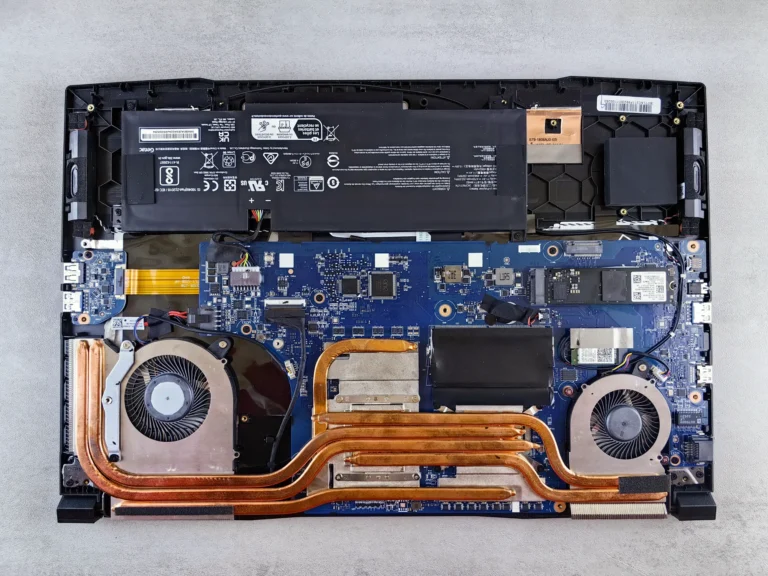
On top of that, real refurbishers don’t just resell a laptop “as is”. We open it up, check components and replace where needed. Sometimes the laptop gets an upgrade straight away: extra memory, a faster SSD or a new battery. That brings it right up to date again.
So that’s something quite different from a marketplace purchase where you have no idea what’s happened to it.
A signal to manufacturers
When you buy refurbished, you vote with your wallet. You send manufacturers a signal: there’s no need to release a hundred new models every year with minimal differences. What many users actually need is compatibility and durability.
By choosing refurbished, you show that you’d rather keep your things longer and that you value quality over a new colour or a 0.1 GHz faster processor.
Note: not everything called refurbished actually is refurbished
Unfortunately, the term “refurbished” is used far too loosely. There are sellers who clean up a used laptop a bit, slap “refurbished” on it and resell it like that. And yes, that can be disappointing.
How do you recognise genuine refurbished quality? “Refurbishers hate this one simple trick”! There are a few things you can do to check whether both the product and the seller are trustworthy.
Check the warranty and the terms
A reliable party gives at least 1 year of warranty, often even longer. With us that’s 1 year as standard, including on the battery, and on many models even 3 years. On top of that, a shop always gives you clear return terms, a transparent sale price (so no vague “guide price” or “make an offer”) and reachable customer service. If a seller doesn’t do that – no warranty, no returns and no clear agreements – then you’re effectively buying from someone who doesn’t stand behind their own products. That says just as much about the product as about the seller.
Feel the outside
Pick the laptop up in your hands and don’t be afraid to look critically. Shake it gently: if you hear rattling, something isn’t right. Look at the keyboard and press on the mousepad: if it feels cheap or flimsy, you know enough. With a plastic casing you can press the edges lightly; if it creaks, that’s not a good sign. And do you see dust in the ventilation grilles or the hinges by the screen when you shine your phone light in? Then the same advice applies: send the device back.
Ask about the inside
For our products we like to provide as much information as possible so you can make a well-informed choice with complete confidence: from the dry specifications (for example “Intel Core i3-8110U, 16 GB DDR4 RAM”) to simple, plain-language explanations (“Processor power: good all-rounder”). We think that matters, because then you know what you’re buying.
Unfortunately, far from every seller does this. There are plenty of sellers who don’t really know what they’re offering. So feel free to ask for details, such as the memory speed or the type of SSD (SATA or NVMe). Can’t the seller answer that? Then you’re probably dealing with a cowboy. And in that case the rule is: send the device back.
Who is refurbished smart for?
Refurbished isn’t always for everyone. Do you expect your laptop to always run the very latest and want to follow every design trend? Then you’ll probably reach for new models more often.
But for most users, refurbished is more than enough:
- Students who need a sturdy laptop for study, Office and Netflix.
- Freelancers looking for a reliable work machine without spending thousands of euros.
- Companies that want to provide their employees with solid hardware, without huge investments.
Conclusion: refurbished has grown up
Refurbished laptops are long past being a dubious second choice. They’re a smart, sustainable and often better option than new. You save money, get proven quality, help the environment and send manufacturers a signal.
But: do your homework. Choose a reliable seller who really inspects, cleans and guarantees. Then you won’t be sold a pup, but simply a solid laptop with a second life.